
The Missing Step Before Problem Solving
Think about the last time someone brought you a problem. A teammate shared frustration about a peer. A direct report voiced concern about a decision. A colleague described something that felt stuck, unclear, or unfair. How quickly did you move to trying to solve it?
Most senior leaders do not pause to fully absorb what they are hearing. They diagnose. They optimize. They offer solutions. They move the conversation forward. That instinct has probably served you well in your career. It is often what helped you earn leadership responsibility in the first place. But in many moments, our reflex to solve skips over something far more important than the solution itself.
Many leaders move quickly into problem solving when the more important need in the moment is relational. People need to feel understood before they are ready to move to solutions. When leaders skip that step, solutions may move forward, but trust and long-term effectiveness quietly erode.
It's not that problem solving is wrong. But when it becomes our only move, we may unintentionally miss what the moment is actually asking of us.
A Better Question: Validate or Problem Solve?
One of the most useful shifts leaders can make is learning to ask a simple question in the moment:
Is this conversation asking for validation or problem solving?
There are absolutely moments when teams need clarity, direction, and decisions. Leaders should not abandon problem solving. But many conversations need something else first. They need understanding. They need emotional regulation. They need someone to slow the moment down enough for meaning to emerge.
Validation creates the conditions where problem solving can actually work. When people feel understood, their nervous system settles. Defensiveness lowers. Openness increases. Thinking becomes clearer. Only then does problem solving land in a way that truly helps.
Leaders can always return to solutions later. What is harder to recover is the relational trust that gets eroded when people feel unseen or dismissed.
What Validation Actually Is
In her book Validation, psychologist Caroline Fleck describes validation as the skill of accurately seeing, understanding, and communicating another person’s internal experience.
Validation is not agreement. It is not an endorsement. It is not lowering standards. It is not fixing and it is not rescuing. Validation is the act of helping someone feel genuinely understood in how they are experiencing a situation, even if you disagree with their conclusions or choices.
Fleck captures this beautifully when she writes, “Validation communicates acceptance, not judgment. It does not pat on the head. It touches the heart.” At its core, validation says, “I see you. I understand how this makes sense from where you are standing.” That simple message carries far more power than most leaders realize.
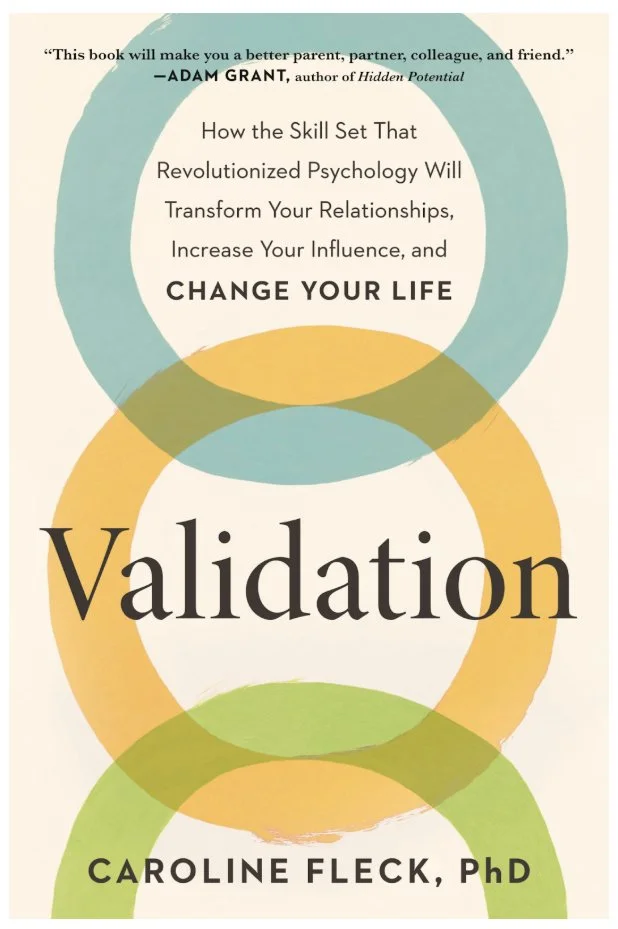
How to Practice Validation: Mindfulness, Understanding, and Empathy
Validation is not complicated, but it does require intention. Caroline Fleck describes three core capacities that make validation possible: mindfulness, understanding, and empathy. Together, they help leaders slow the moment down enough to truly connect before moving into action.
Mindfulness begins with presence.
This is the discipline of giving someone your full attention without rushing to interpret, fix, or judge what you are hearing. It means listening beyond the words to tone, energy, and emotion. It means noticing when someone is frustrated, discouraged, uncertain, or energized, even if they are not explicitly naming it. Mindfulness creates the signal that someone has your attention and that their experience matters.
Understanding moves from listening to meaning.
Here, you make a thoughtful attempt to grasp how the situation makes sense from the other person’s perspective. You consider the context they are operating in, the pressures they may be carrying, and the assumptions shaping their reaction. Understanding often sounds like reflecting back what you are hearing and checking whether you have it right. This step communicates respect for their internal logic, even when you may not fully agree.
Empathy connects emotionally and humanizes the moment.
Empathy acknowledges the emotional reality of what the person is experiencing. It names the feeling and honors it without minimizing or dismissing it. This is where people most often feel seen. Empathy does not solve the problem. It stabilizes the relationship so that problem solving, when it comes, can actually be productive.
In practice, validation might sound like:
“That makes sense given how much responsibility you’re carrying.”
“I can see why that would feel discouraging.”
“It sounds like you’re feeling torn between two competing pressures.”
“Help me understand what mattered most to you in that moment.”
None of these statements fix anything. They create the conditions where clarity, trust, and forward movement can emerge.

Why Validation Matters So Much on Leadership Teams
When people feel validated, several important things happen:
Trust deepens and people become more willing to speak honestly and take relational risks.
Defensiveness decreases and conversations become less about protecting and more about learning.
Psychological safety grows and teams become more open to feedback, disagreement, and experimentation.
People feel more connected when they are truly listened to.
In healthy teams, validation becomes a quiet accelerator of performance. It improves the quality of dialogue, strengthens the resilience of relationships, and makes conflict more productive instead of corrosive.
Keep It Real and Practice It Often
Validation is not a script. People can feel when empathy is forced or performative. The goal is not to say the perfect phrase. The goal is to genuinely care about understanding the person in front of you. Authentic presence builds far more trust than polished technique ever will.
You won't always get it right. You may misread a situation or miss the emotional mark. That's okay. Repair itself becomes a powerful act of leadership when handled with humility and honesty. What matters most is your willingness to slow down, stay open, and choose connection over control.
This week, notice how quickly you move into solving. Pause and ask yourself what the moment actually needs. Experiment with leading with validation first and observe what shifts in the quality of your conversations, the depth of trust, and the openness of your team.
Over time, these small moments compound. They shape the emotional culture of your leadership team and the relational health of the entire organization. Sometimes the most powerful leadership move is not having the right answer, but helping someone feel truly understood.
-Shaun & Joe