
The Succession Risk Most Teams Miss
Imagine your CEO unexpectedly stepped away for six months. Not permanently, but just long enough that the organization couldn't simply wait it out.
What would happen? Would priorities remain clear? Would major decisions continue to get made? Would the culture feel stable? Would the Executive Team step forward and collectively be able carry the organization forward?
Or would everyone begin looking for the person who normally has all the answers?
Most organizations think succession planning begins by identifying who might replace the CEO someday. But the best succession plans begin much earlier, by building an executive team that can lead together long before a transition ever occurs.
The answer to the six-month question often reveals a significant organizational vulnerability - over dependency on the CEO.
In many organizations, the CEO becomes the primary keeper of strategy, the steward of culture and the primary decision-maker for things related to financials and strategy, and even key operational issues in some cases. This rarely happens because leaders want it to. In fact, it often happens because they are effective in these areas and could be counted on to deliver results. Over time, however, the organization can begin relying on one person for far more than anyone realizes - and that poses a significant risk.
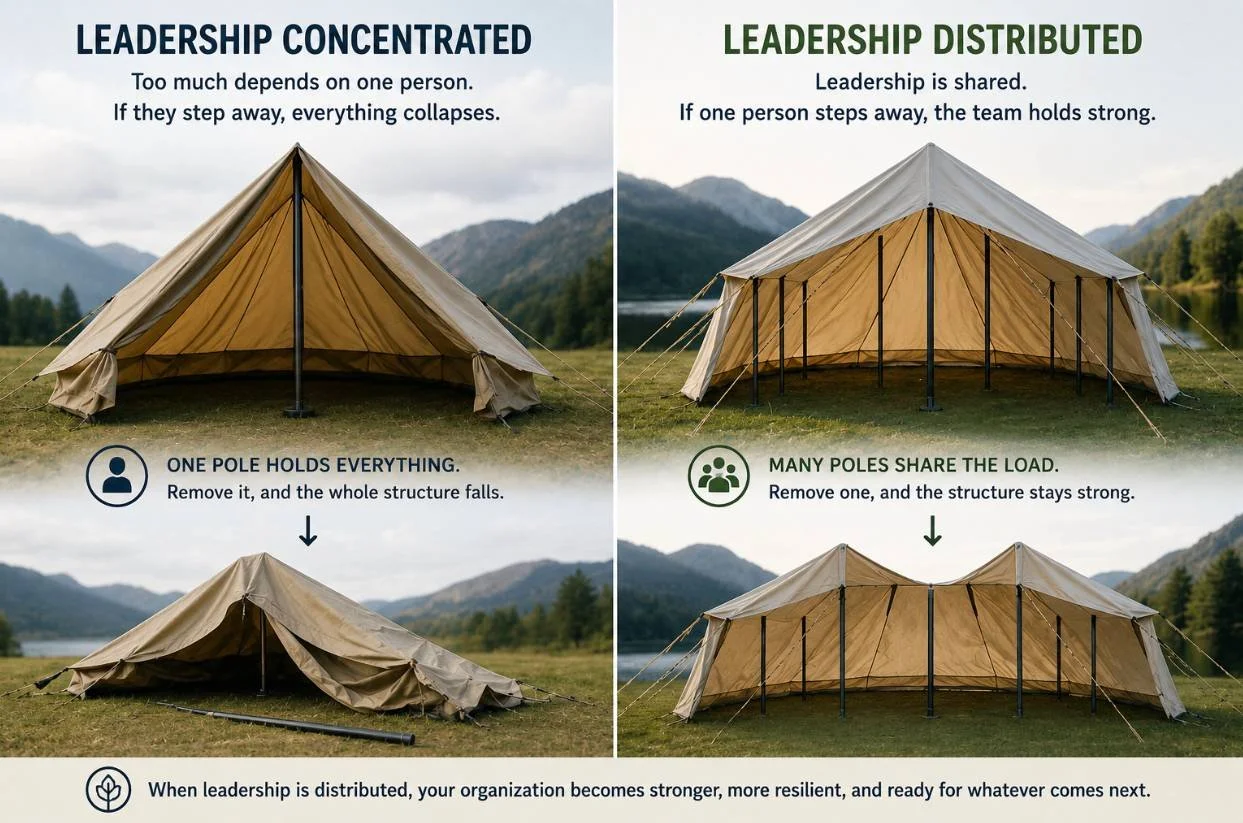
The greatest succession risk is rarely the absence of a successor. It's the concentration of leadership.
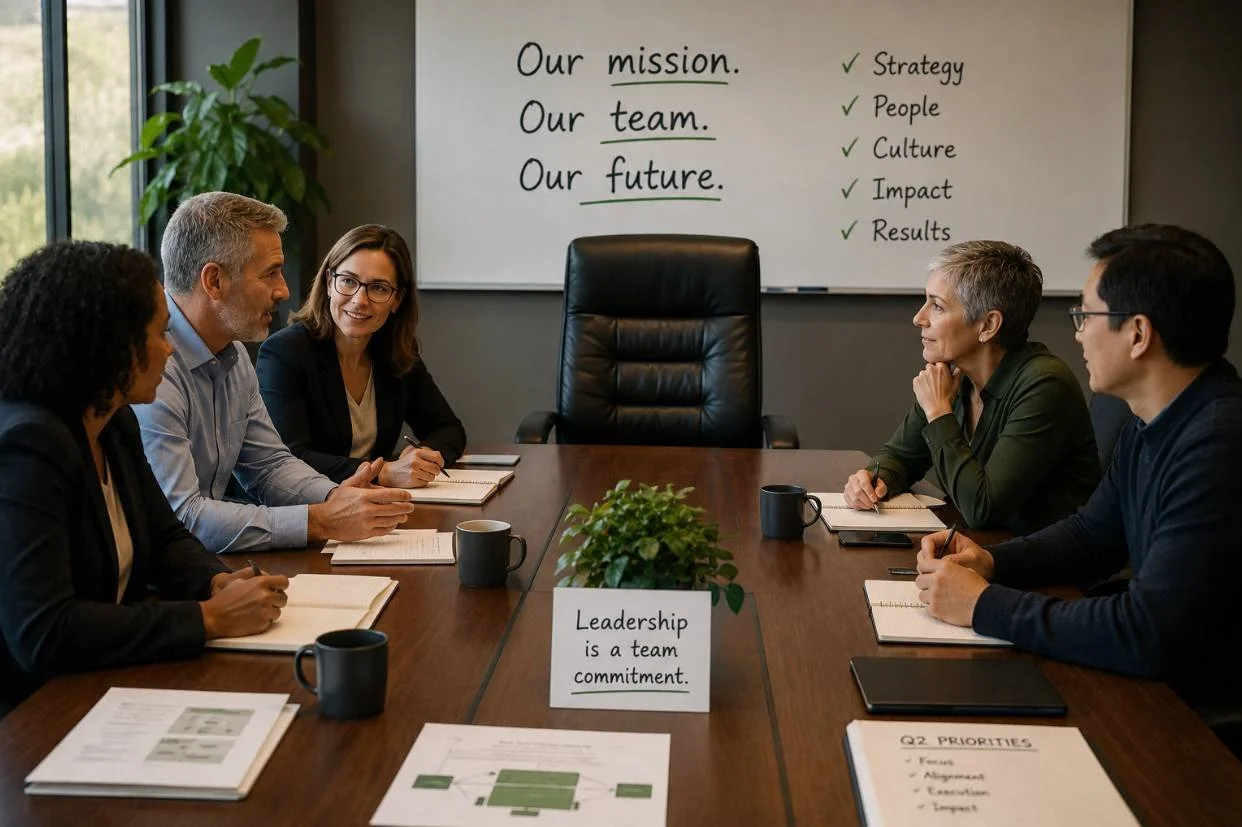
The Best Succession Plan Is a Strong Executive Team
Traditional succession planning asks a straightforward question:
"Who could replace the CEO?" It's an important question.
But a team that is committed to truly leading together as a cohesive executive team, invites us to ask a different one:
"How do we ensure the organization can thrive even through leadership transitions?"
The strongest organizations recognize that strategy, culture, and organizational performance cannot belong to one person alone. Instead, they intentionally develop an executive team that shares ownership of the organization's success.
They own strategy together.
They steward culture together.
They monitor performance together.
They solve big problems together.
They make difficult decisions together.
Over time, leadership becomes less dependent on any one individual because the team has developed a shared way of leading, collaborating, and executing together. This is one of the reasons we believe so deeply in developing teams that can lead the organization together.
When leadership becomes a team sport rather than an individual responsibility, the organization becomes significantly more resilient.
Building a Team That Can Carry the Work Forward
A leadership team becomes succession-ready long before a succession plan is ever needed. It happens when the team takes the time to collectively define
How strategy will be developed and executed
How healthy culture will be measured
How decisions will be made
How they will set short term priorities
How they will measure organizational performance
How their business model works, and when they will measure performance against it
How they work through conflict
How they will give each other feedback - in all directions
Most organizations don't label these things as succession planning. Yet they may be some of the most important succession planning work an organization can do. Every investment in how a team leads together reduces dependence on a single individual and increases the organization's ability to navigate change.
A Final Thought
Imagine asking your Executive Team a simple question: "What would happen if our CEO stepped away for six months?"
The answer has very little to do with the strength of a succession document. It has everything to do with the strength of the leadership team. The goal of succession planning isn't simply to identify who will occupy the top seat next.
It's to build a team capable of carrying the mission forward regardless of who occupies it.
-Shaun & Joe