
Manager Engagement Improves When Leaders Build True Teams Instead of Leading Alone
Each year, Gallup releases its State of the Global Workplace report, offering a clear look at how people are experiencing work.
This year’s report surfaces a trend that should give leaders pause.
Overall engagement hit its lowest point since 2020, but more concerning is where that decline is happening. Managers, the very group organizations rely on most to drive engagement, are experiencing the most significant decline.
Gallup has led the way in helping organizations to understand that no single factor has a greater influence on an employee’s engagement than their manager. As a result, organizations have invested heavily in developing managers to be the primary drivers of engagement, performance, and culture.
And yet, the data suggests that something is not working.
If the group we depend on most to create engagement is becoming less engaged themselves, something significant needs to change.
The Weight We’ve Placed on Managers
The insight regarding the influence managers have on engagement has been incredibly significant in shaping how many organizations operate. Organizations have placed an enormous amount of responsibility on the role of the manager to drive engagement, performance, and culture. But it seems to be leading to an over-reliance on the individual manager as the primary engine of engagement.
Managers are expected to motivate their teams, develop their people, drive results, and navigate increasing complexity. And in many cases, they are asked to do all of this while operating largely on their own.
When you step back, it raises an important question.
Are we asking too much of managers when it comes to engagement?
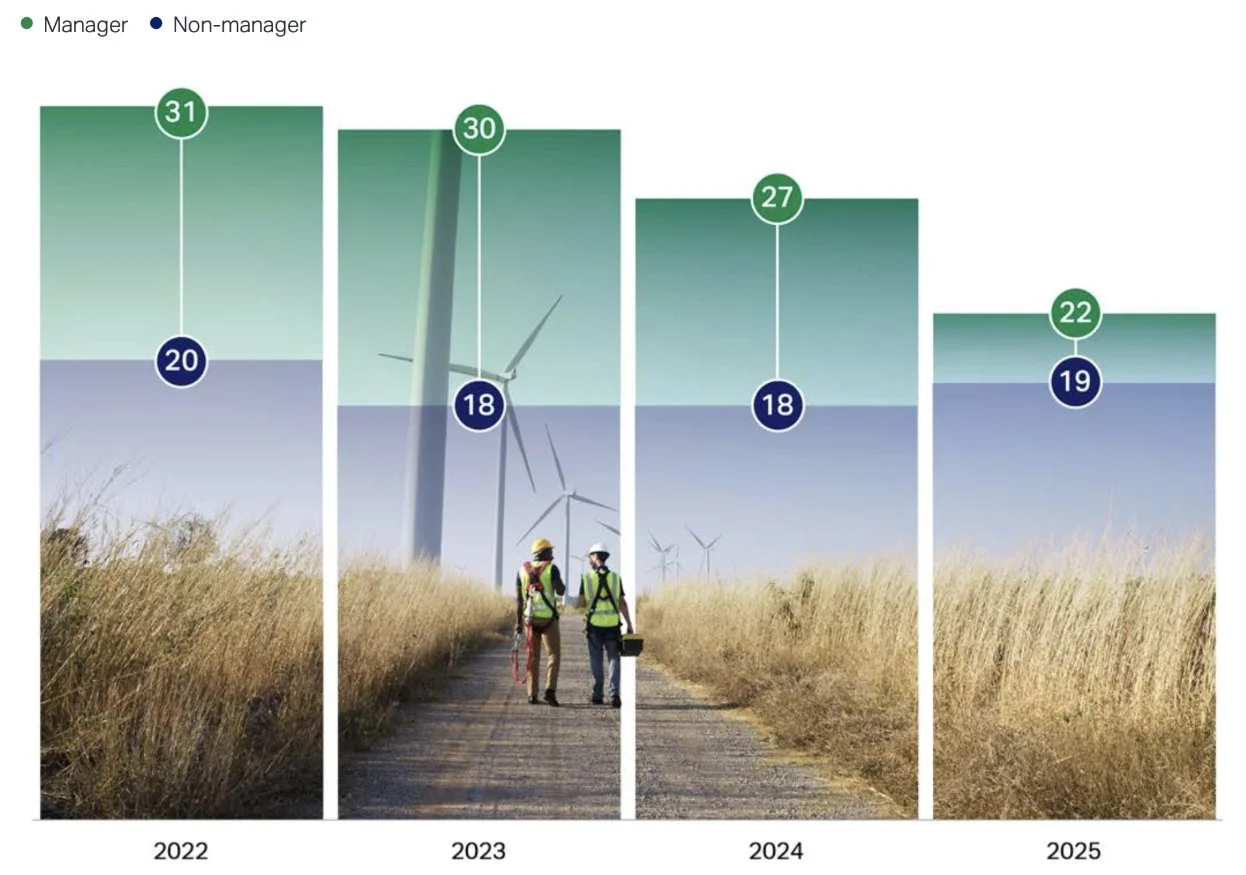
Why Engagement is Dropping with Managers
The recent decline in manager engagement begins to make more sense through this lens. While they are responsible for driving engagement, too many of them don’t get to experience the very conditions that make engagement possible.
Because they are largely leading alone, they are less likely to be part of a true team of peers working toward shared outcomes. Mid level and front-line managers are less connected to the highest-level priorities of the organization. They often carry responsibility without the same level of shared ownership, collaboration, and support that exists at more senior levels.
Over time, this creates a gap. Managers are expected to create engagement for others without consistently experiencing it themselves.
The Mirage of Team
Many managers would say they are part of a team.
And in one sense, they are. They attend monthly or quarterly manager meetings where leaders gather to share updates, stay informed, and maintain alignment across the organization.
Those moments serve a purpose. They can help with alignment and understanding of org-wide performance. However, a true team collaborates significantly more than a monthly gathering.
A true team is defined by shared responsibility. It is a group of leaders who are collectively accountable for meaningful outcomes, who work through challenges together, and who stretch one another’s thinking over time.
Most managers do not consistently experience that.
Instead, they lead their own area and operate largely independently, coming together periodically with others for updates. The space where real work happens often requires solo leadership.
Over time, this can lead to a significant drop in engagement. When managers aren’t working in Teaming environments they miss out on the challenge, support, and energy that come from working closely with peers toward a common goal.
You can even see this gap through the lens of a few of the engagement questions that Gallup has used for years.
Questions like:
Are my coworkers committed to doing quality work?
In the last seven days, have I received recognition or praise for doing good work?
At work, do my opinions seem to count?
When a manager is not part of a true team, when they are not regularly working alongside peers toward shared goals, it becomes much harder to answer these questions positively. They have less visibility into how others are showing up. Fewer opportunities to be recognized by peers who understand their work. Fewer moments where their perspective is actively shaping outcomes.
Rethinking the Model
If we take these insights seriously, it begins to challenge a long-standing assumption. Perhaps the answer is not to continue placing more pressure on individual managers, but instead, to rethink how leadership actually happens across the organization.
Most organizations are designed around a single leadership team at the top. Below that, leaders are often left to operate as individual contributors to leadership rather than as a collective.
While the most senior leadership team does have the most influence, it's most certainly not the only team where collaboration is needed to reach desired levels of performance. It happens across programs, regions, and functions. And in each of those areas, there are groups of leaders who share responsibility for meaningful outcomes.
What is often missing is the structure and expectation for those groups to operate as true leadership teams.
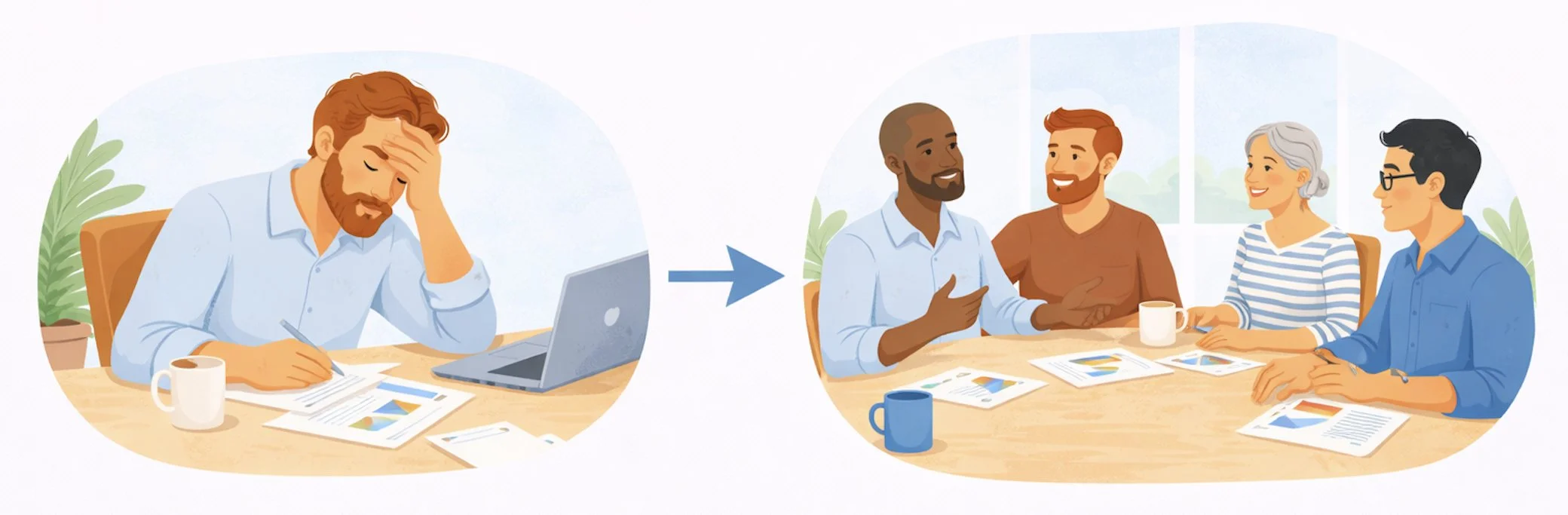
From Managers to Many Leadership Teams
What if we shifted from a model that relies heavily on individual managers to one that builds many leadership teams throughout the organization?
Teams where leaders are collectively responsible for outcomes.
Teams where they regularly come together to align priorities, make decisions, and navigate challenges.
Teams where they experience the same sense of connection, purpose, and shared ownership that exists at the executive level.
This is the shift toward teamship, and it has implications beyond performance. It creates the conditions for engagement to take hold at every level of the organization, not just at the top.
A Final Thought
The data is clear. Engagement is declining for managers. If the people we rely on most to create engagement are becoming less engaged themselves, it may not be a matter of effort or capability. It may be a matter of design.
We have asked managers to carry too much on their own. And while strengthening individual leadership skills will always matter, it is not enough on its own.
If we want to build organizations where engagement is strong and sustainable, we need to create the conditions where leaders are not operating alone.
We need to build teams of leaders who are connected, aligned, and responsible for the work together.
-Shaun & Joe