
Rethinking “Bring Me Solutions, Not Problems”
“Don’t bring me problems. Bring me solutions.”
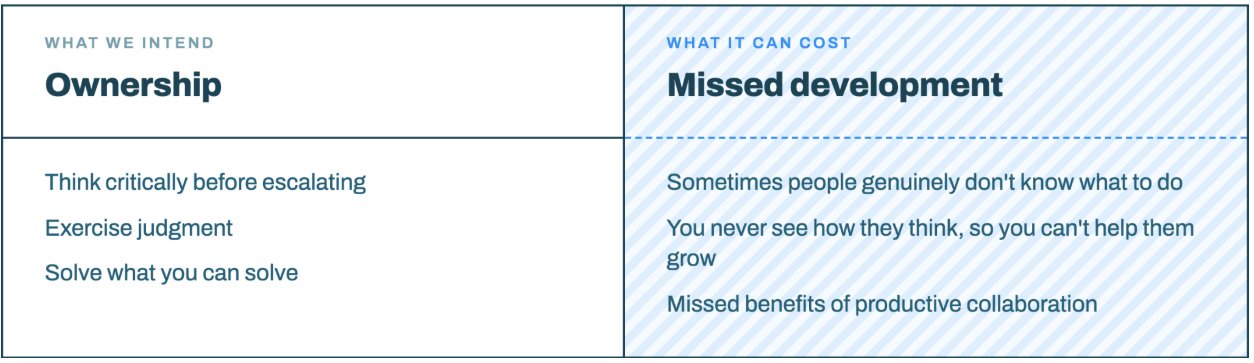
It’s a piece of leadership advice most of us have probably heard at some point, and there’s certainly some good intent behind it. Leaders that say this are hoping that people will think critically, exercise good judgment, and solve problems rather than simply escalating every challenge upward.
However, if we apply this line of thinking to everyone we work with and in every situation, we are missing some meaningful development and collaboration opportunities.
The reality is that sometimes people genuinely don’t know what to do. They’re facing something they haven’t encountered before, working through a situation that stretches beyond their experience, or considering a few options but struggling to determine the best way forward.
If the expectation is that you should only bring a problem to your leader once you’ve figured out the solution, we may be eliminating one of the best opportunities we have to develop people. There’s a difference between expecting people to take ownership and expecting them to figure everything out on their own.
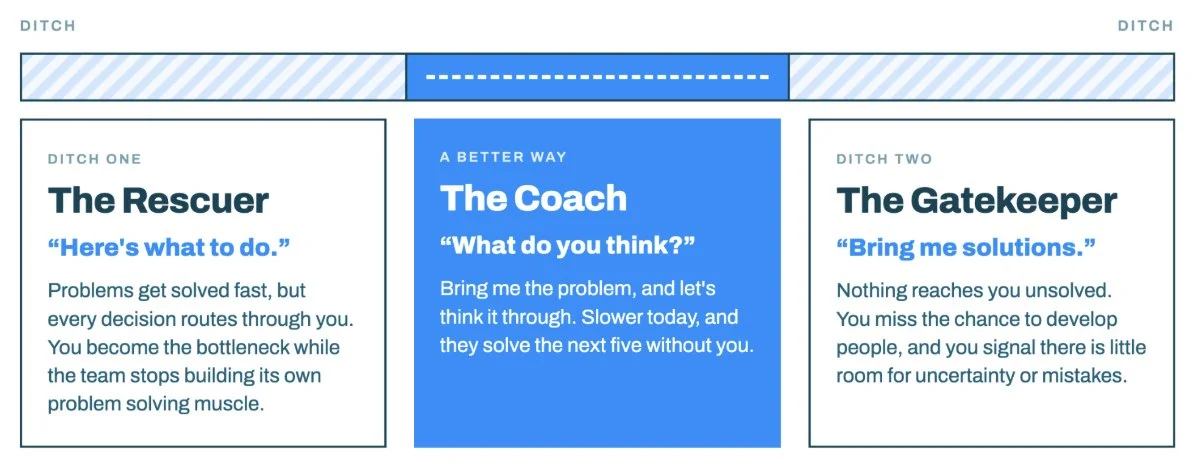
When we conflate the two, “bring me solutions, not problems” can become its own leadership ditch.
The Other Ditch - Solving Every Problem
Of course, there’s another side to this. The more a leader cares about their team and wants them to succeed, the more tempting it can be to solve problems for them.
Someone walks into your office with a challenge. You’ve dealt with something similar five times before, and within a few minutes you can see what they should do, so you tell them. They leave with an answer, the problem gets solved, and everyone gets back to work.
In the short term, this can feel like great leadership. But repeat that pattern often enough and you become the answer vending machine.
More decisions start flowing toward you and people become accustomed to seeking your input before acting. Your team may be getting a lot of problems solved, but they aren’t necessarily becoming more capable of solving those problems without you. Meanwhile, your own capacity gets smaller and smaller.
That’s what makes this such an easy trap to fall into. Solving the problem is often faster today. Developing the person is usually better for tomorrow.
A Better Way: Show Up Like a Coach
There’s a better place between these two ditches. Don’t require people to have the answer before they come to you, but don’t assume that because they brought you a problem, you need to solve it either.
Instead, show up like a coach. Slow down your advice reflex and start with curiosity. Ask questions like:
What options are you considering?
What do you think we should do?
Good questions require someone to diagnose the problem, weigh options, and exercise judgment. They also give you a window into how that person is thinking, which is often far more valuable for their development than simply knowing whether they landed on the answer you would have given them.
Of course, there are times to give advice or step in. The goal isn’t to stop helping. It’s to redefine what helping looks like. Coaching someone through a problem may take longer today, but if it helps them solve the next five without you, you’ve created capacity for both of you in the future.
A Final Thought
Helping people to develop a mindset of ownership doesn’t require figuring everything out alone. And servant leadership doesn’t require solving everything for everyone. There’s a better place in between, where leaders make themselves available without making themselves the answer to every problem.
So the next time someone brings you a problem and you immediately know what they should do, resist the urge to answer right away. Ask a good question instead. If your tendency is to solve the problem, work on doing less of that. If your tendency is to expect them to bring all the solutions, look for opportunities to help them work through a key challenge.
The problem may take a little longer to solve, but you’ll be developing the person who can solve the next one without you.
-Shaun & Joe