
Leadership Teams Improve Performance When They Intentionally Shape Team Norms
I’ve realized recently that our team adopted an accidental agreement we never actually discussed. Joe calls it: Slack Zero.
Anybody who has ever been in a Zoom meeting with me and caught a glimpse of my inbox usually gasps. I am absolutely not an Inbox Zero person.
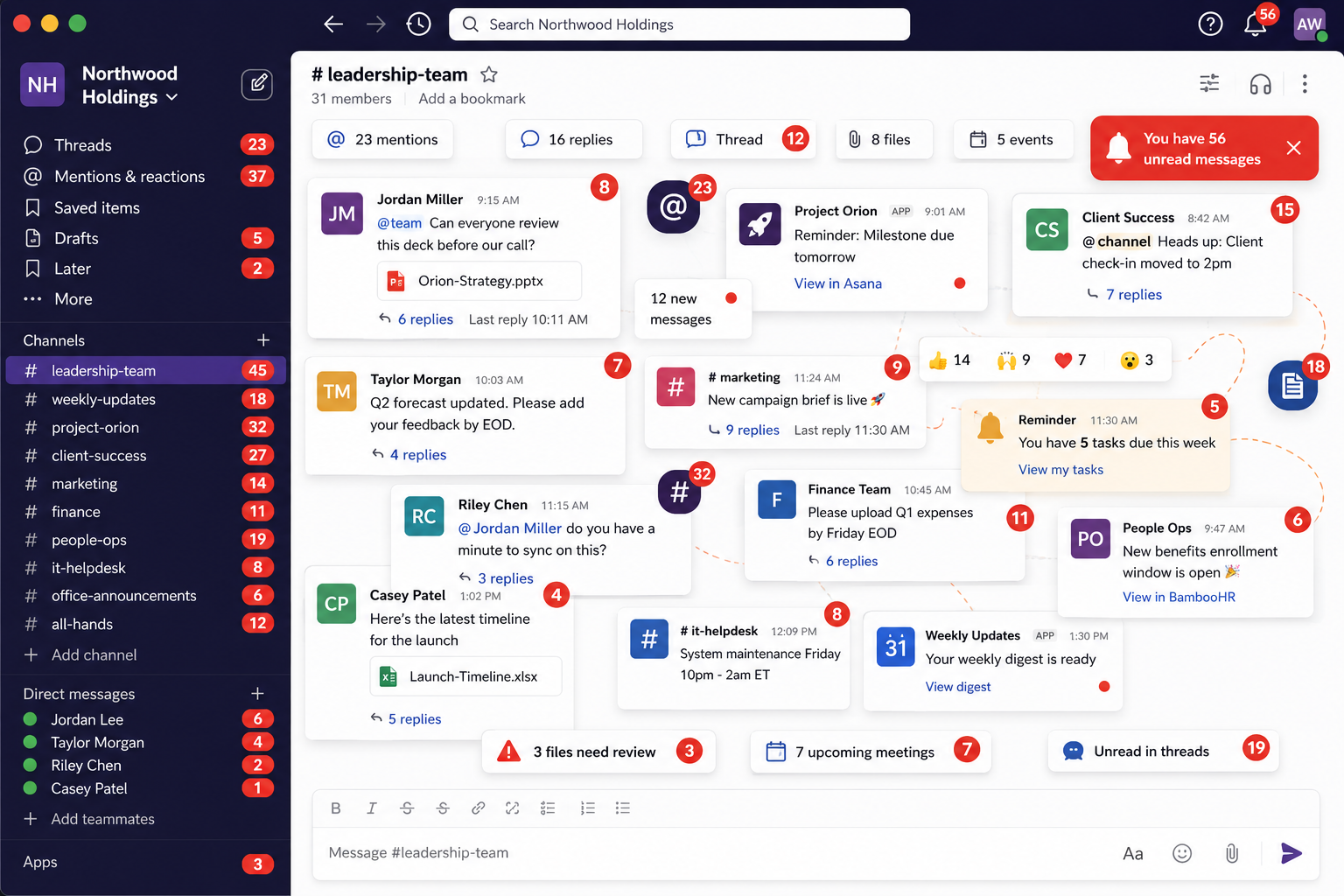
But Slack? Completely different story. Without ever formally talking about it, our team collectively drifted toward a norm where Slack messages get answered almost immediately. This norm came from a good place – we all want to be responsive teammates. We care about each other. We want people to feel supported and unblocked.
But there has been a cost to this accidental norm. There have been multiple moments recently where I reached the end of the day realizing the deeper, more important work I hoped to make progress on never happened. Not because I was lazy or distracted, but because I spent the day over-emphasizing responsiveness to my teammates.
Slack Zero quietly pulled me away from doing deep, strategic work.
Accidental Norms Are Still Norms
The tricky thing about accidental norms is that they often emerge from good intentions. Nobody on our team said, “We should optimize for constant responsiveness.” We just slowly gravitated there because we care about being good teammates.
And honestly, every team has agreements like this that they never consciously made. Over time, repeated patterns quietly become expectations, and eventually those expectations become culture.
The challenge is that norms shape behavior whether they were intentionally designed or not.
Accidental Norms Show Up in Both Systems and Relational Dynamics
Some accidental norms emerge in systems. For example, many executive teams slowly drift into a habit of canceling key meetings anytime someone cannot attend instead of rescheduling them. At first, it feels accommodating and flexible. But over time, strategic conversations lose momentum, operating rhythms become inconsistent, and the team begins functioning more reactively than intentionally.
Other accidental norms are relational. Teams that genuinely care about one another can slowly drift into avoiding healthy conflict in order to preserve harmony. Concerns stay unspoken, and key questions go unasked. Over time, the team may appear aligned on the surface while becoming less candid underneath. The result is an unspoken norm that the team doesn’t deal with conflict head on, it brushes it under the rug.
The problem is rarely the intention behind them. The problem is when teams never stop to examine the tradeoffs the norms are accidentally creating.
High-Performing Teams Intentionally Develop and Revisit Norms
High-performing teams don’t leave their operating norms to chance. They intentionally discuss and define how they want to work together because they understand that clarity around communication, meetings, conflict, responsiveness, and accountability shapes the health and effectiveness of the team over time.
This is one of the reasons we encourage teams to create a Team Charter. Not because the document itself changes behavior, but because the conversations create shared clarity and move expectations from assumption to agreement.
Healthy teams also recognize that norms cannot simply be defined once and left alone. As organizations grow, priorities shift, workloads change, and new teammates join, teams need space to reflect on whether the way they are operating is still serving them well.
That’s why strong teams build rhythms that create intentional space to revisit and refine how they work together. A Quarterly Sync is a great example of this because it allows teams to step back and honestly assess what is helping the team thrive, what tensions are emerging, and what adjustments may be needed moving forward.

That’s exactly what happened with Slack Zero for us. Once we recognized the tradeoffs it was creating, we began experimenting with new agreements around responsiveness and focus time. The relief was almost immediate, not because we became less supportive teammates, but because we became more intentional about how we support one another.
A Final Thought
One of the dangers of accidental norms is that they slowly become invisible - this is what makes them so hard to identify, by the way. Teams adapt to them over time and eventually begin treating them as fixed realities instead of design choices that can be revisited and improved.
But healthy teams resist that drift. They regularly create space to examine how they are working together, identify the tradeoffs their norms may be creating, and make intentional adjustments that better support the kind of team they want to become.
-Shaun & Joe